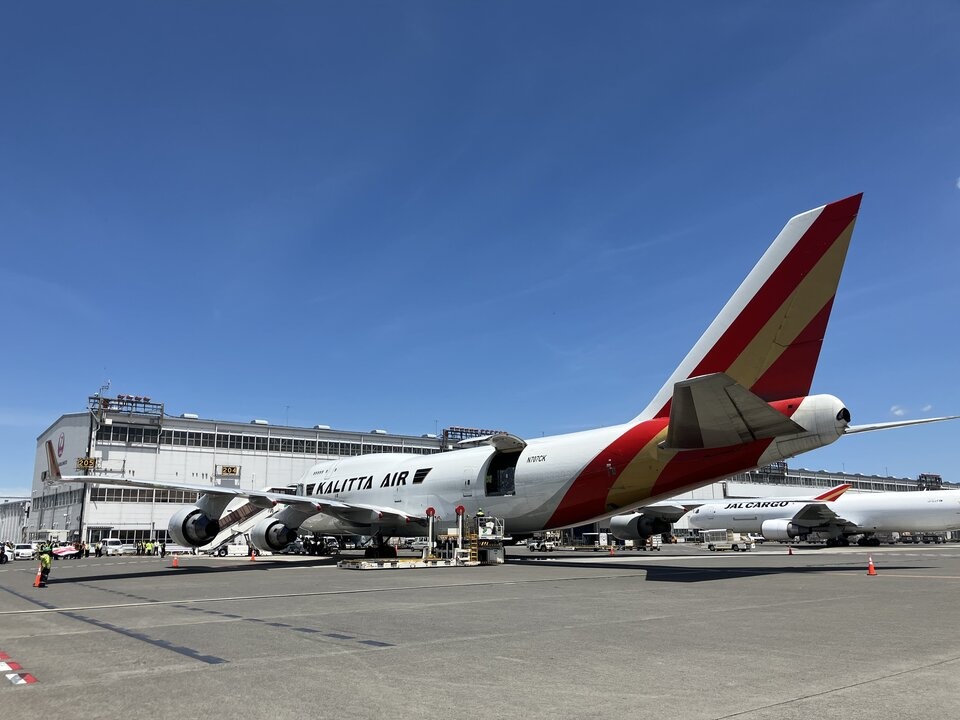
Cleared Direct: Kalitta Air's Flight on the Night of September 11
Twenty-five years ago, as America's airspace sat empty, a small Kalitta Air crew loaded a 747 with medical supplies and flew into the unknown. Four of the people who were there share what they remember.
On the morning of September 11, 2001, a Kalitta Air 747 touched down at Los Angeles International Airport after an overnight cargo run from Dayton, Ohio. For the crew, it was supposed to end like any other trip: offload the freight, put the airplane to bed, grab breakfast, and sleep.
Loadmaster Michael Manbeck was kicking the last pallets off the main deck when flight mechanic Allen Ruell came toward him faster than usual. Allen's wife had just called. Airplanes had hit the World Trade Center. Another had struck the Pentagon, and a fourth was still in the air.
As the two men closed up the aircraft, Allen stuck his head out the cargo door and noticed something no one who works at LAX ever expects.
"Mike, listen," he said. "It's dead quiet."
No arrivals. No departures. One of the busiest airports in the world had gone completely still.
"We got a trip tonight"
The crew made it to their hotel, where the lobby was packed with stranded travelers and flight crews watching the attacks replay on televisions wheeled in on carts. By late afternoon, like everyone else in the country, they assumed they were grounded indefinitely.
Then Allen's hotel phone rang. It was Kalitta Air operations.
"We got a trip tonight."
At the time, Kalitta Air was a young company with three aircraft. Its Operations Control Center, where Troy Midora worked, was three people. "We were small," Troy recalls. "We were still trying to find our way." Now that small team was being asked to launch a 747 out of a closed airport, into closed airspace, on a few hours' notice.
The cargo was roughly 87 tons of medical supplies: blood, plasma, bandages, morphine, and pallets of synthetic skin for burn patients packed in dry ice. It had been gathered from hospitals and burn centers across Los Angeles throughout the day. The shipping documents listed around 30 hospitals across the Northeast. The country was preparing for mass casualties.
"We're flying tonight"
When the crew reached the airport that evening, it was ringed by police. Every inch of concrete seemed to hold a grounded airplane. A SWAT officer boarded their van.
"Gentlemen, you know the airport is closed, right?"
Captain Dan Socia didn't hesitate. "I understand it's closed, but we're going to go to work. We're flying tonight."
Security hadn't been told a crew was coming, and officers quickly surrounded them on the ramp. Flight engineer Ralph Fritsch turned to Allen and asked what they should do. "Run, Ralph, run," Allen told him, "and see what happens." It broke the tension, briefly.
Most of the ground handlers had been sent home, so the few people left built the pallets by hand. The crew loaded what they could and taxied out with an airport security truck off each wingtip. The runway lights were dark until the tower cleared them for takeoff. Then they came on.
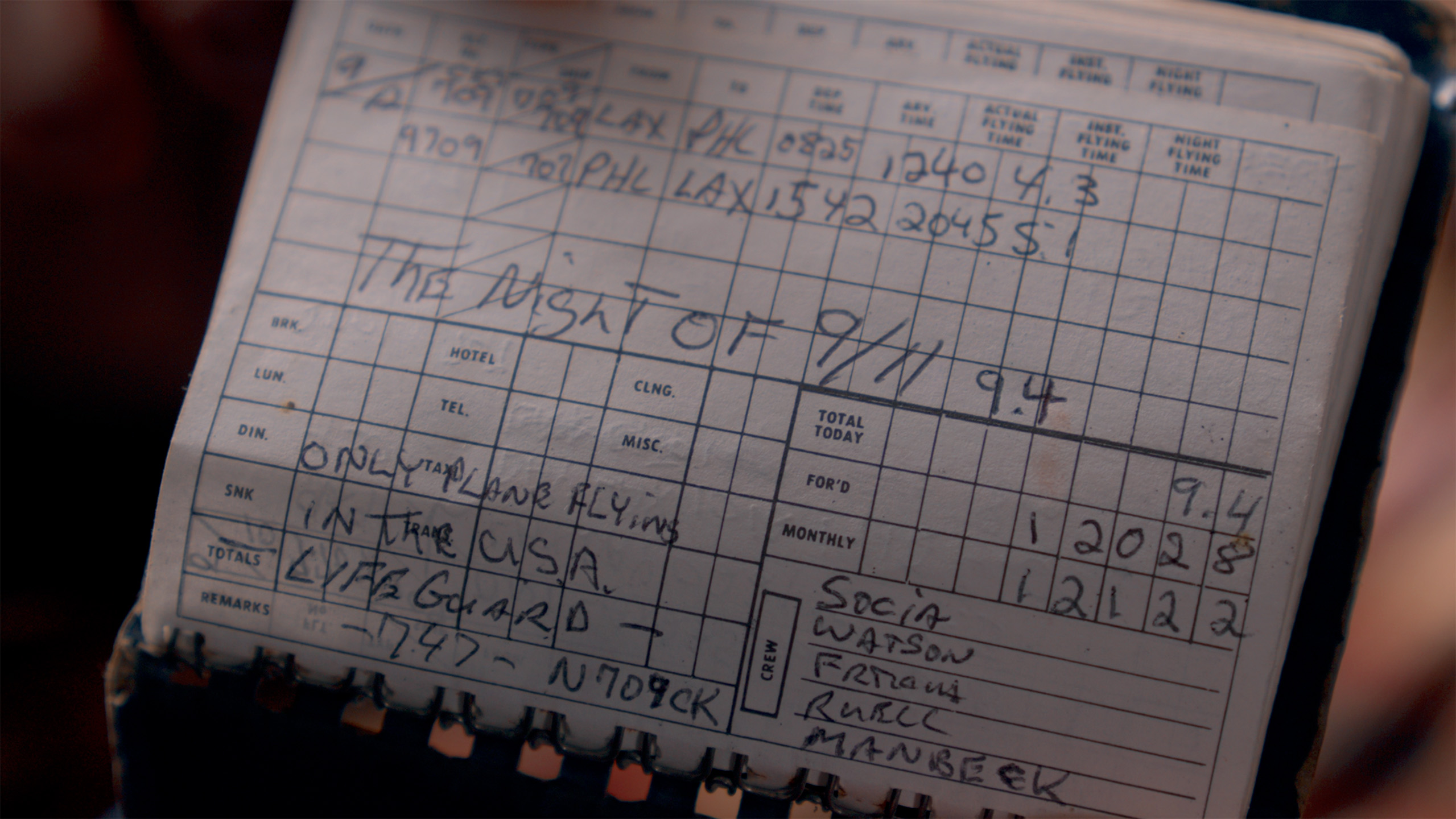
Their call sign that night was Lifeguard.
"We barely get the gear in the well," Ralph remembers, "and they go, 'Clear left-hand turn, direct Philadelphia.'"
To a pilot, that clearance is extraordinary. "That is unheard of," Michael says. "They will hand you off to the next sector, but never direct."
Across an empty country
The radio stayed nearly silent for the whole flight. The crew checked in with each controller, was handed to the next, and heard little else. Over Denver, an Air Force tanker held in the dark. The crew recalls being the only commercial aircraft flying in America's skies that night.
They weren't entirely alone. The 747's collision-avoidance system kept picking up traffic nearby: military fighters, shadowing them across the country.
Allen tried to sleep and couldn't. He sat at a window searching the sky for the escort he never saw. "We were a big, big target," he says. "One bad move, and they were going to take us out. I kept thinking, God, if I see a streak coming or something, we're done."
Plans to fly straight into New York were scrapped because of the restrictions around the city. Instead, the flight landed in Philadelphia, where 25 to 30 trucks were backed up and waiting on the ramp. The supplies were unloaded quickly and driven to hospitals across the region.
News crews were waiting on the ramp in Philadelphia. Cameras had caught the 747 taxiing out of Los Angeles, too, and back home, families recognized it on CNN.
Ready to keep flying
The crew returned to Los Angeles expecting to turn around and do it again, as many times as it took.
"I'd have done trips until I fell down," Allen says. "We all would have. The thought of not doing it never even crossed our minds."
The follow-up flights were canceled. The hospitals had prepared for survivors in numbers that, tragically, never came.
Twenty-five years later
Ask the people who were there, and they'll tell you they were simply doing their jobs.
"It was still just the job," Ralph says.
"I'm no special person," Michael adds. "We just happened to be the crew nearest to the cargo."
But the mission took more than the five people on board. Ops coordinated it, maintenance cleared the aircraft, ground crews built the load, and people across a three-airplane company found a way to make it happen. "It's a team effort," Michael says. "It's called crew coordination."
Troy, who went on to deploy with the Army Reserve to Guantanamo Bay and later Iraq, still speaks for everyone who worked that day. "The pilots, the loadmasters, the mechanics, the operations personnel, all the support staff," he says. "The company did an absolutely awesome job under very trying circumstances."
Michael still has the flight log he kept, with the night of September 11 recorded on its final pages. Allen didn't keep a copy of his, and says he never talked about the flight much. It wasn't until the tenth anniversary, standing among thousands of flags at a cemetery in Las Vegas, that he let himself reflect on it.
"We did something special that day," he says.
Today, Kalitta Air honors Captain Dan Socia, First Officer Neil Watson, Flight Engineer Ralph Fritsch, Flight Mechanic Allen Ruell, Loadmaster Michael Manbeck, Operations Controller Troy Midora and every team member who helped make that mission possible.
Above all, we remember the nearly 3,000 people who lost their lives on September 11, 2001, the heroes who ran toward danger, and the families who still carry the loss of that day.
We answer the call when our nation is in need. May we never forget.